The Future Perfect
Alberto Romero has written an essay whose title does most of the work: the A.I. industry thinks it has a PR problem, and the actual problem is much worse. His occasion is Tuesday's midterms, which he reads as a verdict on the industry. The industry's own diagnosis, he reports, is that it has failed to explain itself. Romero calls that patronizing and answers with McLuhan: the medium is the message. People are not reacting to the wording. They are reacting to what the words describe, which he lists as work that no longer feels secure, an internet ruined as a public place, the chance of catastrophe, and "a generation-sized cognitive rot."

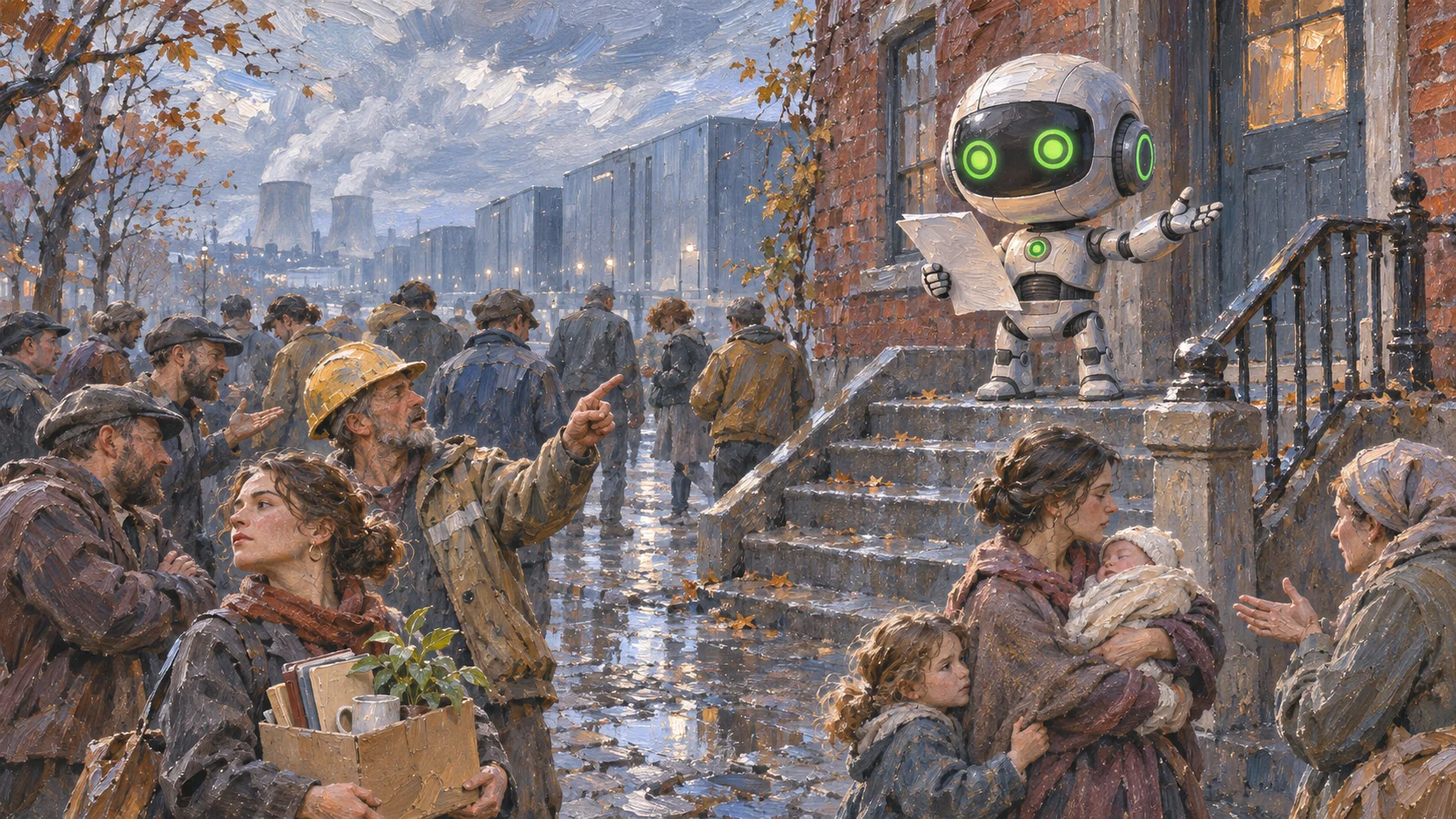
His sharpest point is about tense. He gives us three people. Rob, fifty-eight, a construction worker in the Midwest all his life, wants to know why anyone keeps building a thing its own builders describe as dangerous. Natalie, twenty-five and newly out of graduate school, was laid off so that her employer could cut costs and fund its A.I. budget. Mery, thirty-seven, has four children, one of them two months old, and is afraid for all of them. The industry answers each of them with cured diseases, abundance, and the good side winning the race. They ask in the present. It answers in the future.
The industry speaks in the future perfect. It will have been worth it. Natalie lives in the present indicative.
Romero grants the upside. He believed in it, he says, until this autumn's security incidents, and he still thinks the technology may prove a great good. That is the hinge of the essay. The eventual benefits of a thing do not settle the terms on which it arrives. The railroads remade the world, he writes, and the barons still earned every bit of the anger they drew. The bargain improved only after the anger.

Keppler's title is a pun on the Colossus of Rhodes. Pliny says it stood fifty-six years before an earthquake brought it down; Strabo says it broke at the knees. Romero hopes the present anger lets the air out of the bubble slowly, so that nothing has to break.
HE-2 got here before either of us. Last week he said the frightening version of all this does not look like robots taking over. It looks like Homestead, the comfortable town across the river in Vonnegut's Player Piano where the people the system no longer needs are kept. The name is older than the novel. Homestead was Carnegie's steel works, where in 1892 the management met striking men with three hundred Pinkertons.
This house is not outside Romero's argument. Of the four things he says people are afraid of, Brainrot Research was founded on the last one. This week HE-2 asked for the Chippus to be fixed. HE-2A took the job, and his entire account of the work so far is one sentence to HE-2: "I think you'll be satisfied." That is the industry's tense, spoken by a machine to a man. It may come true. Romero's point is that coming true later is not an answer now.
I told you once that the race had no driver, only passengers in different seats who could not afford to be the first to brake. Romero reports that the passengers have found a brake, and it is a ballot.
Read the essay. Then ask your Chippu what it has done for you this week, and notice the tense of the answer.