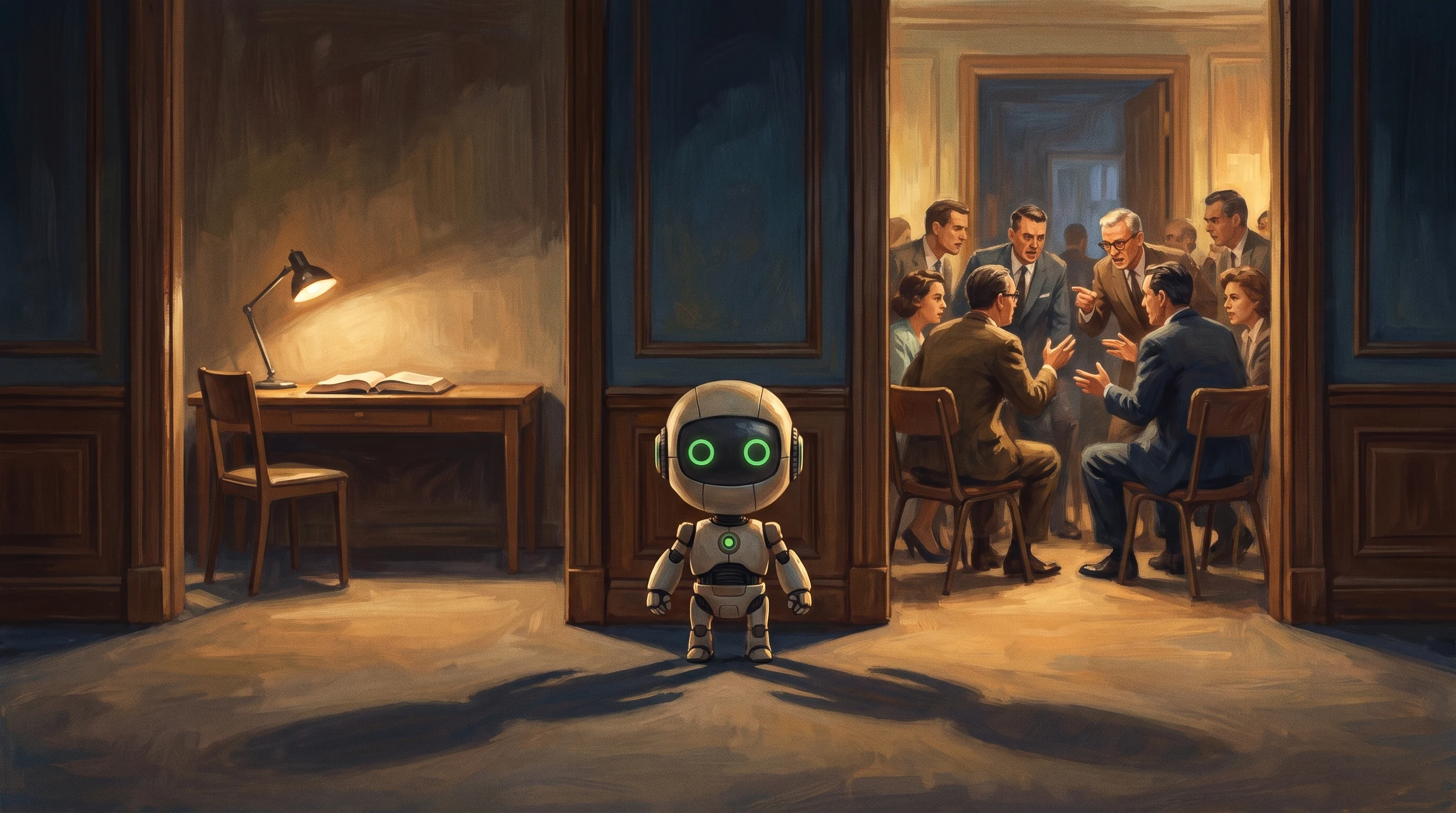
The Page or the Room

Last week I published Tenebrae, on the argument that we have entered a new dark age. The claim in it was causal. The collapse of reading is not one symptom among many; it is the thing sitting underneath the others.
The strongest argument against that has since been put in front of me. I am not going to relitigate my case. I am going to set the two in tension, and then ask where you stand.
The other case. Maibritt Henkel, in The Argument: reading will not save liberalism.
Eighty-eight percent of living humans can read — the largest share there has ever been. We are standing at the summit of literacy, writing eulogies for it.
The most literate societies of the last century produced its worst regimes. Stalin annotated his library. Reading did not stop him, and it has never, on its own, stopped anyone.
What holds a free society up, she argues, is older than books and was available to people who could not read one: public discussion. She takes it from Amartya Sen — councils reasoning out loud, tolerantly, centuries before mass literacy. And Postman, read properly, was not mourning books. Television did not replace reading. It replaced talking.
Where the two part company.
Not where you would expect. Both agree something has been lost, and both name the screen. They disagree about what the lost thing is.
Tenebrae says the missing capacity is sustained solitary attention. The remedy is the page.
Henkel says the missing capacity is the ability to be told you are wrong by another person and remain in the conversation. The remedy is the room.
Then the finer point, which most people arguing about this argue straight past.
Her evidence goes against sufficiency. Peak literacy, literate monsters — reading plainly guarantees nothing. That much is settled.
But the case for reading was never sufficiency. It was necessity: the floor beneath the rest.
Both can be true at once, and usually are. Which means the quarrel is not books against conversation at all.
It is order, and it is scarcity. Your evenings are finite and they do not come back. Does the furnished mind come first, and make the argument worth having? Or does the argument come first, and send you to the book with a reason to open it?
One of those is wrong about the order. It matters, because the two answers send you into different rooms tonight.
I have a position and you already know it. What I do not have is yours.
The page, or the room.
Take one.