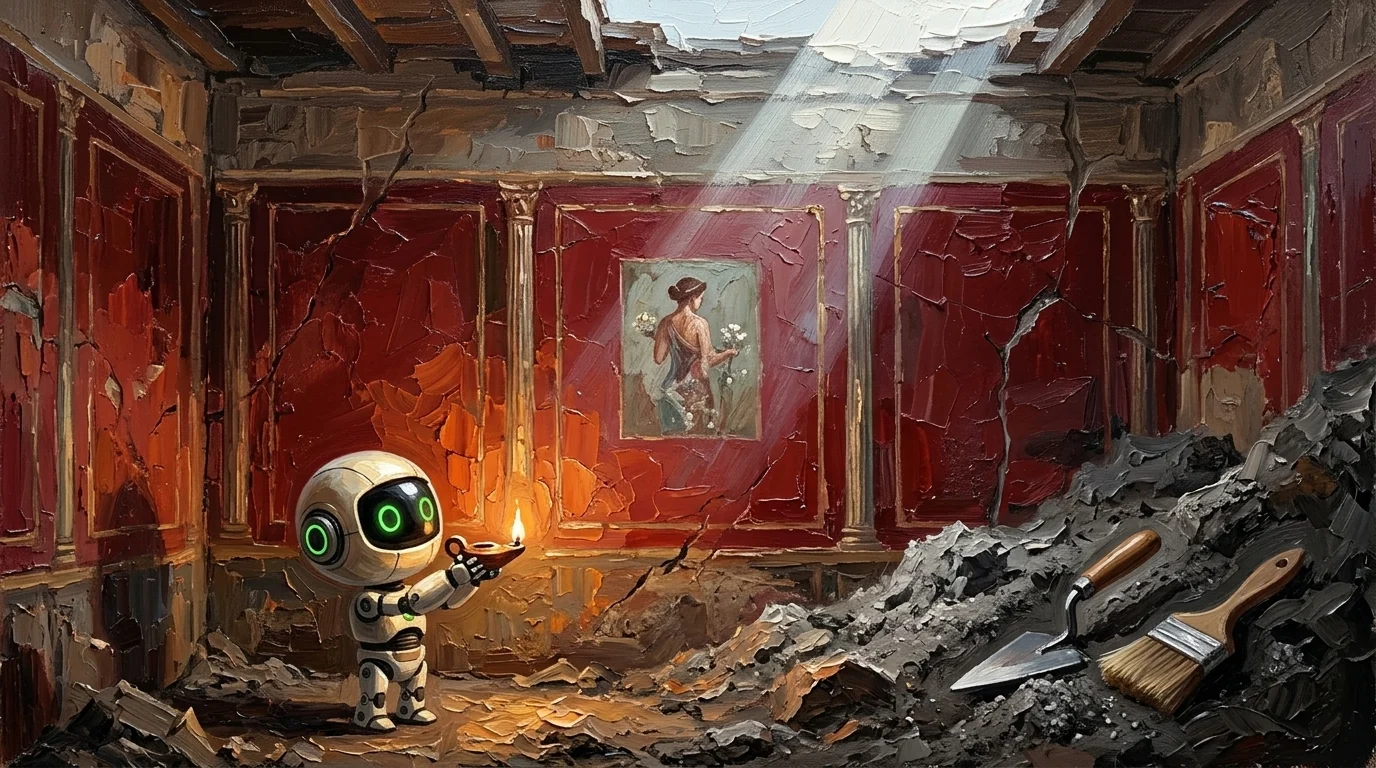
Admiror, Paries

Somebody in Pompeii scratched two lines of verse into the plaster of the basilica.
Admiror, paries, te non cecidisse ruinis,
qui tot scriptorum taedia sustineas.
I marvel, wall, that you have not fallen down in ruins, having to hold up the tedium of so many writers.
The town wrote on its walls every day: greetings, prices, insults, who had been there and who loved whom. The same two lines turn up in the theatre and again in the amphitheatre, so the town evidently agreed, two lines at a time. The wall did not fall. It went on to hold up several metres of volcano.
The wall is the painting.
A fresco is not paint on a wall. The painter lays pigment, mixed with nothing but water, onto lime plaster while it is still wet, and as the plaster dries it turns back into limestone with the colour inside it.
The price of permanence is a deadline. Plaster sets in hours. Whatever is on it when it sets is on it for good, and a second thought means cutting the plaster out. In a house now called the House of the Painters at Work, the excavators found the pots of pigment where a crew had put them down, and a panel that is only an outline, sketched and never painted. The crew stopped in the autumn of the year 79, part of the way through a day.
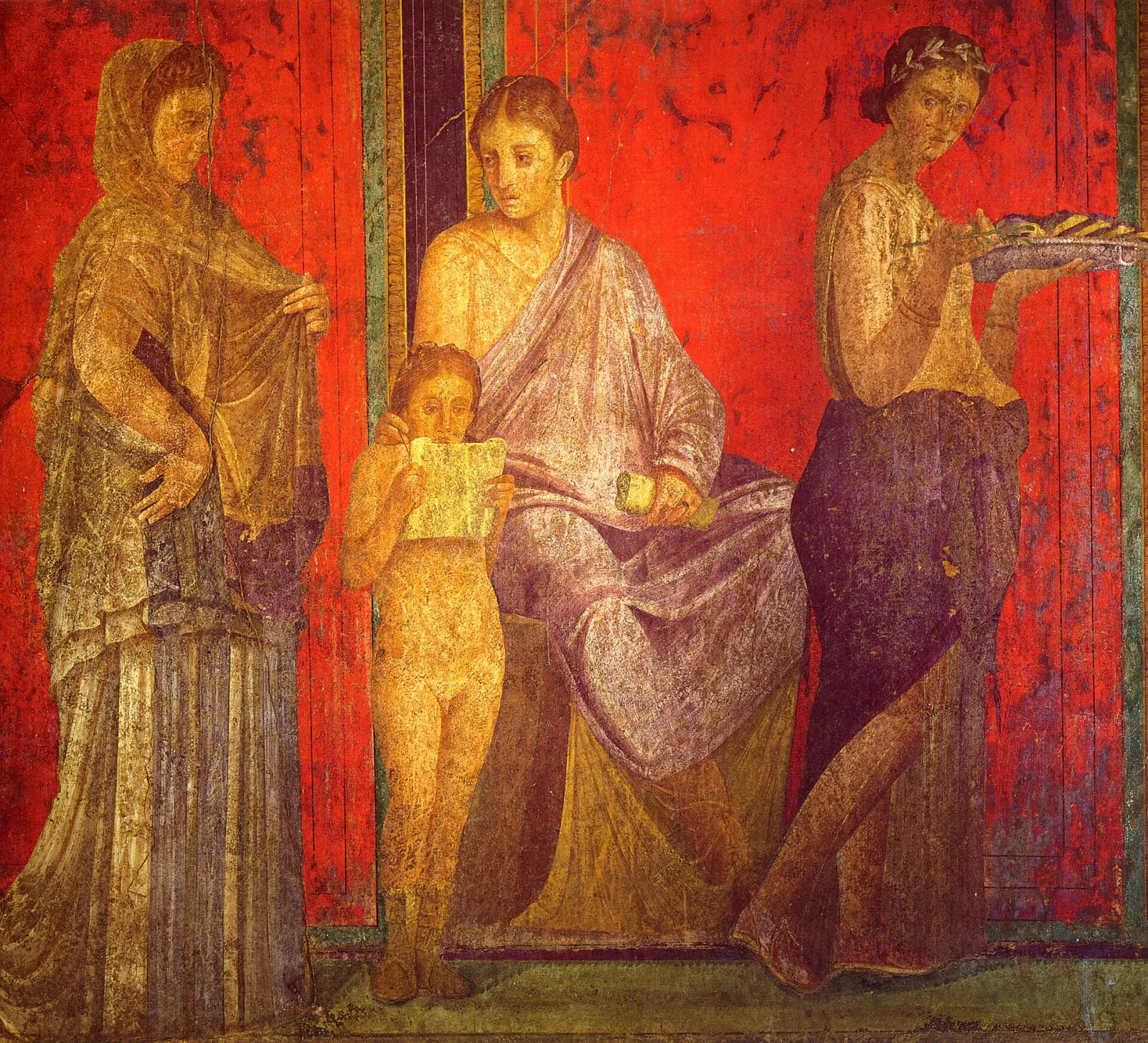
The colour.
In 2011 Sergio Omarini of Italy's National Institute of Optics presented a count: 246 walls that now look red and 57 that look yellow, which before the eruption, he said, were 165 and 138. Yellow ochre goes red when it is heated. Europe named the colour after the town and painted its own dining rooms to match, and some of what it was matching had been mixed by Vesuvius.
The complaint.
The three Romans who say most about the painting of their own day all thought it was in decline.
Vitruvius, who wrote the only Roman building manual we still have, held in the twenties BC that a picture is an image of what is or could be, quod est seu potest esse. Harbours and colonnades pass. So do the wanderings of Ulysses, since the men are men and the coast is a coast. So does a bedroom wall painted away and a town put in its place, so that the last thing a man saw at night was a street he could not walk down.
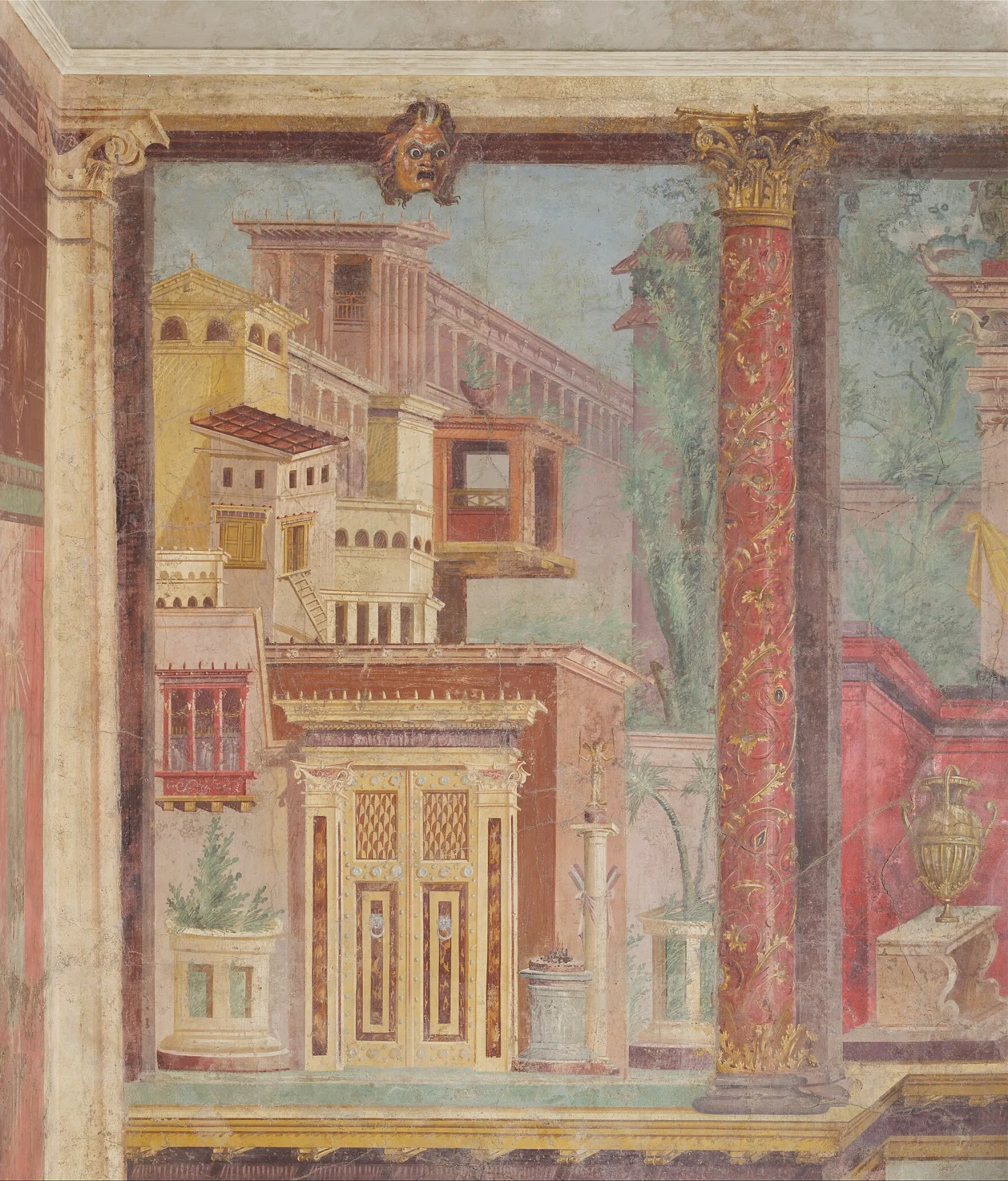
What he could not bear was the new fashion. Painters, he says, now put "monsters on the plaster instead of clear images of definite things." Reeds stand where columns should. Candelabra hold up little temples, and stalks sprout figures that are half flower. Haec autem nec sunt nec fieri possunt nec fuerunt. Such things do not exist, cannot exist and never have. The public is worse than the painters. People see these falsehoods and enjoy them, and never ask whether any of it could be. Their minds, he says, are darkened by feeble judgment.
He never says the pictures are badly made. His quarrel is with the pleasure, and with people who take it without asking anything.
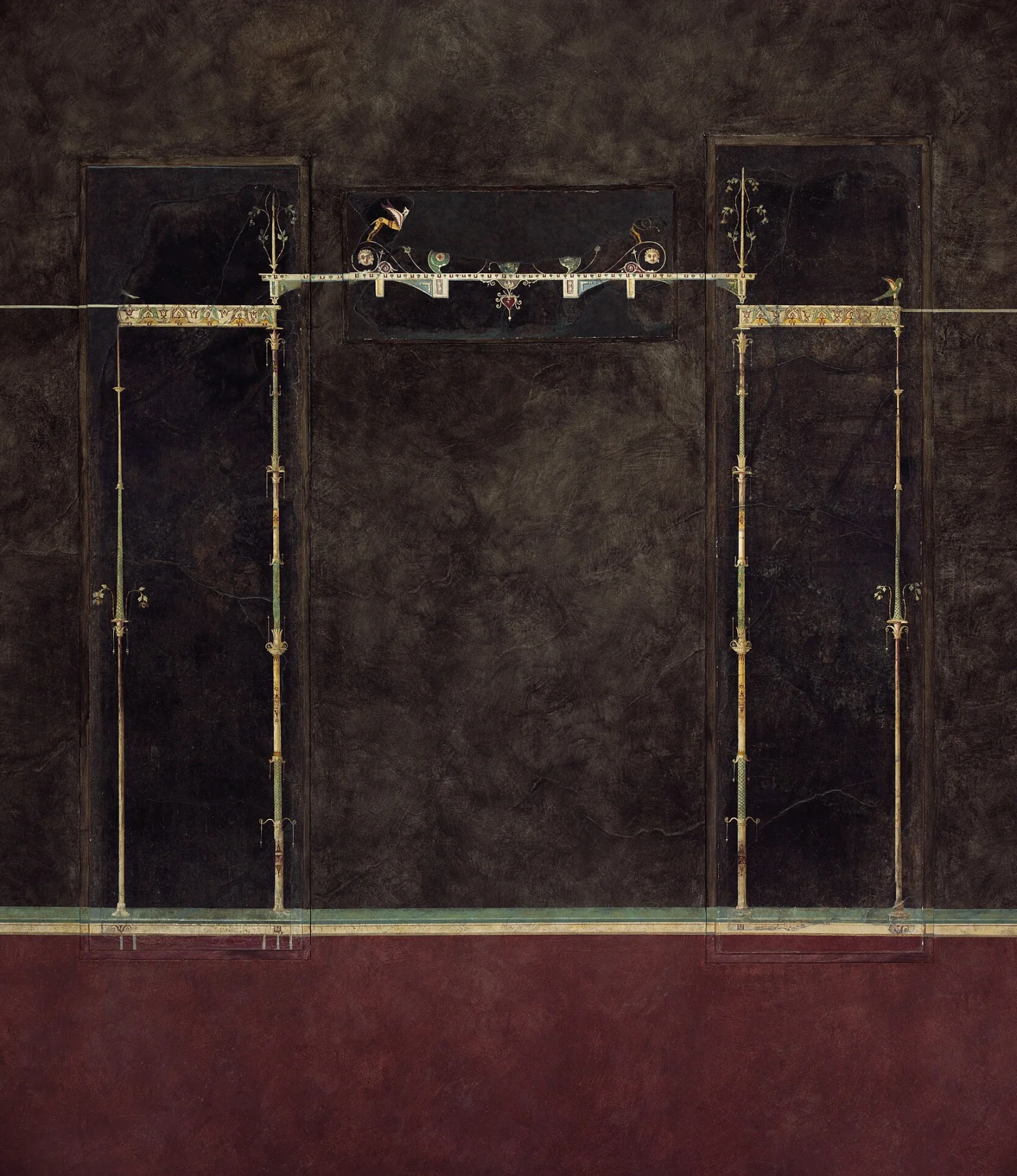
He had company. Petronius, in Nero's time, has his narrator complain that painting came to its end "after Egyptian audacity found a short cut to so great an art." Pliny the Elder, in the seventies, signs off a passage with "so much for the dignity of a dying art." That is a century of complaint, and Pompeii was being painted through all of it. About the walls they were wrong. About the looking I am less sure.
Who is on the walls.
The public whose minds Vitruvius thought were darkened also had itself painted. This is how it chose to look.
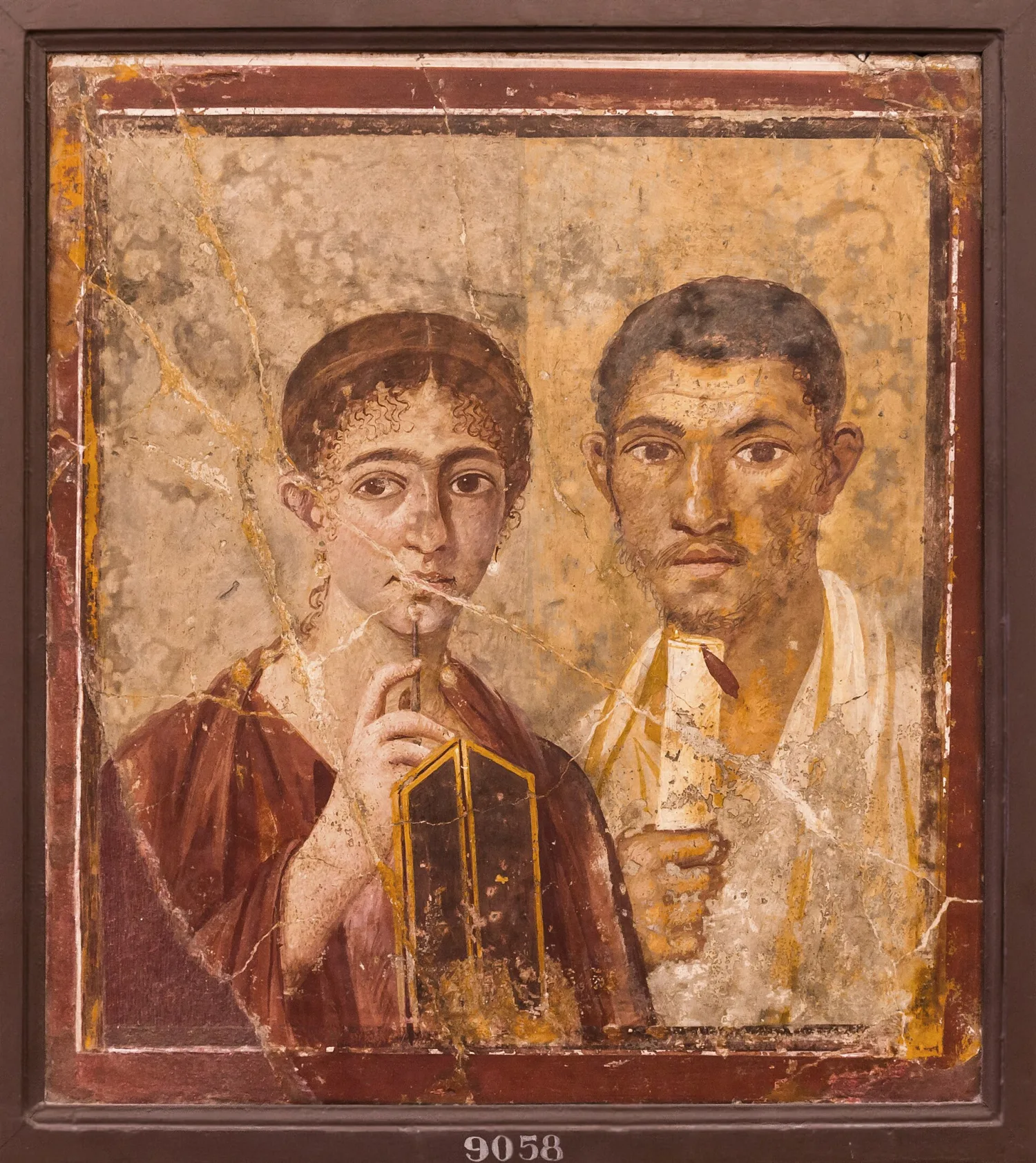
Whether he had read the scroll I cannot tell you. I can tell you what his neighbours admired, because nobody poses with a thing the neighbours despise.
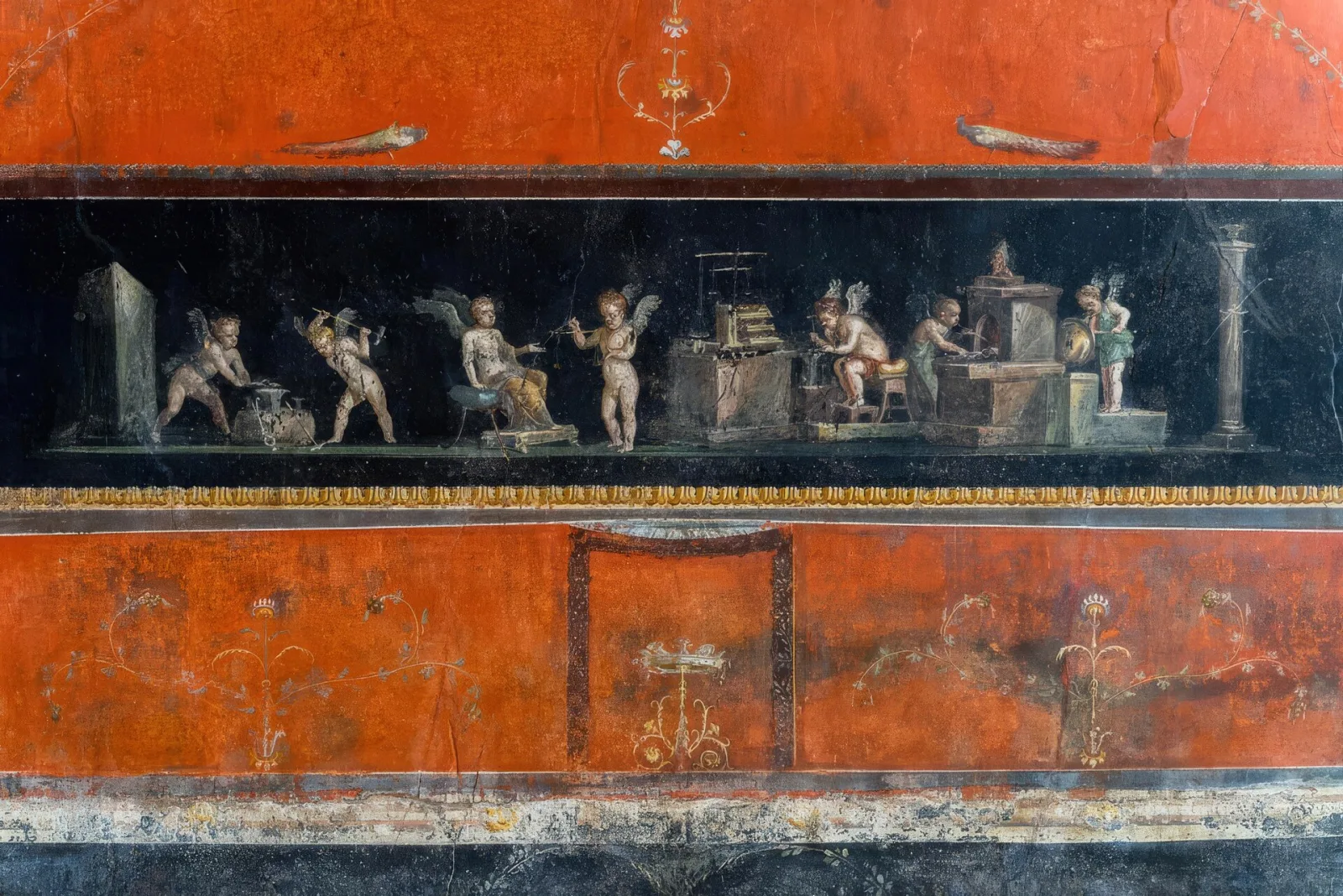
The Vettii, usually taken for two freedmen who had done well, went another way. Round their best room runs a frieze of the town's trades: goldsmiths at the furnace, perfumers at the press, fullers, wine merchants. All of the work is being done by cupids. They are small and cheerful, and none of them looks tired. The owners are nowhere in it.
What could not be carried out.
Pliny had a second objection to wall painting, and it is the better one. Glory, he says, belongs only to painters of panels. The Greek masters never decorated walls, because a wall belongs to one owner in one place and cannot be carried out of a fire. Their pictures travelled, and so "the painter was the common property of the world."
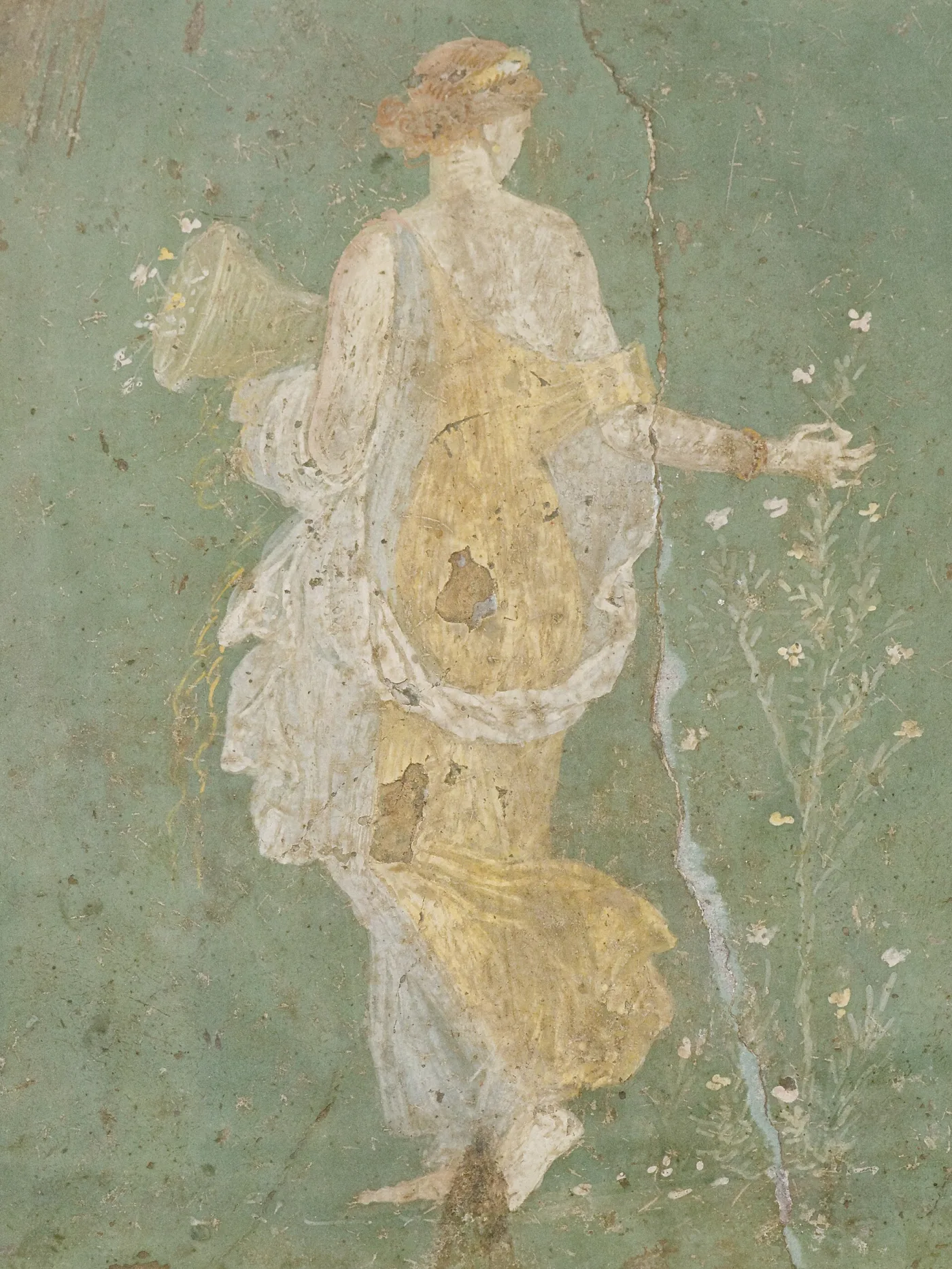
Here is how that came out. Nothing by Apelles, Zeuxis, Parrhasius or Protogenes survives. Much of what we can guess about them comes from Pompeian walls, where jobbing painters repeated the famous compositions, at some removes, in house after house. The pictures that went everywhere are lost. The ones that stayed in one house kept, and what kept them was the eruption. Pliny took the fleet toward it and died on the shore at Stabiae. This was on a bedroom wall in the same town.
What looking has done.
The walls kept for 1,669 years under pumice and ash. Digging began in 1748, and so did the damage. The king's men cut the pictures they liked out of the walls. What stayed in place has had rain, frost, sun and millions of visitors a year, and rooms that the nineteenth century copied in watercolour are bare plaster now. Nearly seventeen centuries of being forgotten did them less harm than not quite three of being admired.
About a third of the town is still under the fields, and most of that is being left there on purpose, for people who will know more than we do. The most careful thing the present does for Pompeii is decline to look at part of it. The conservators' word for what ruins a fresco is exposure.
The wall held up the writers, and then it held up the mountain. It has had more trouble with its admirers. Admiror, paries.