Opening page…
How do you know any of this is real?
Descartes noticed that his dreams could feel as real as his days. Now some people wonder whether the whole world is a simulation.
Your answer
Read alongside it1
ContextA little context
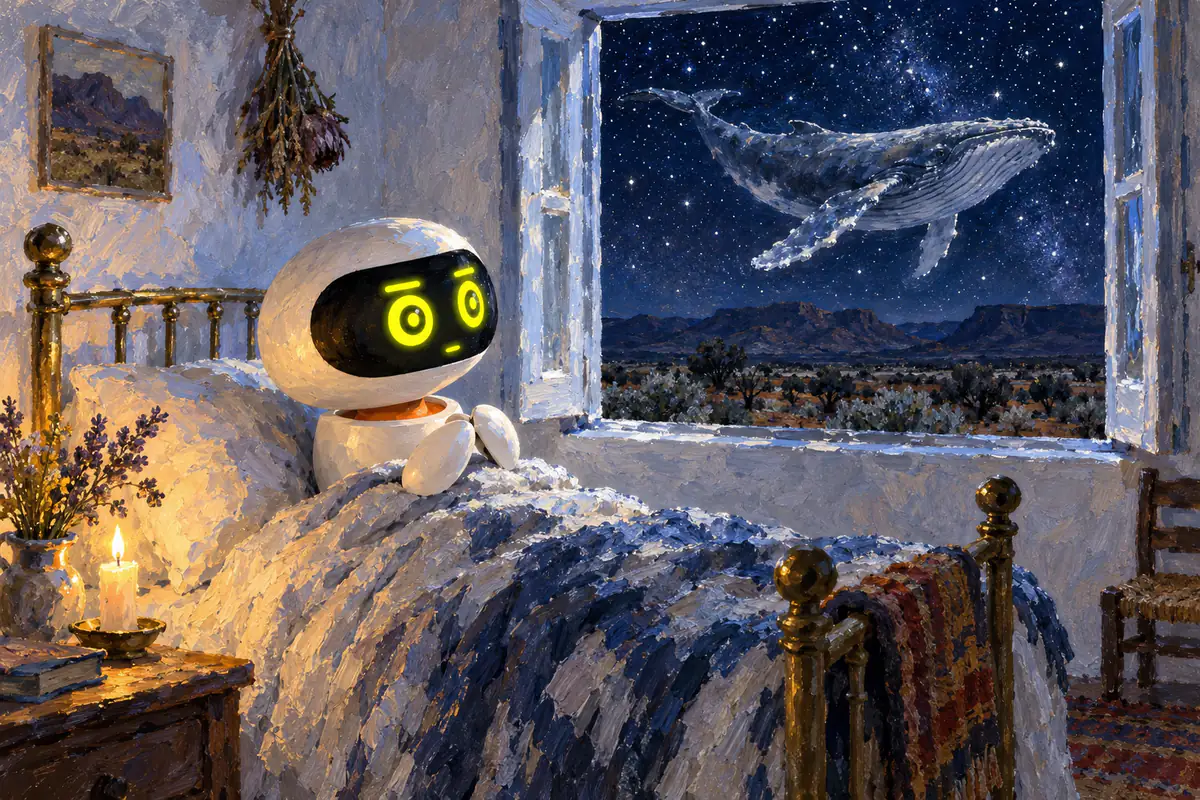
You have woken from dreams that convinced you completely while they lasted. You argued, ran and grieved in them, and never once thought to check. That's the unsettling part. The feeling that this is real was there the whole time, and it was wrong. So what is it worth now? Zhuangzi told the story most lightly, in China in the 300s BC. He dreamed he was a butterfly, enjoying itself with no idea it was Zhuangzi. Then he woke up, plainly Zhuangzi again, and could not tell whether he was a man who had dreamed of being a butterfly or a butterfly now dreaming it was a man. He doesn't treat this as a crisis. For him it is a glimpse of how things pass into one another, which he calls the transformation of things. Descartes, two thousand years later, treated it as a crisis and put it to work. In his Meditations (1641) he resolved to doubt everything that could be doubted, first through dreams and then by imagining a powerful demon feeding him a false world. One thing survived: while he was thinking, he had to exist, even if only to be deceived. From there he tried to rebuild everything else, and plenty of readers have found the rebuilding shakier than the demolition. Calderón's play Life Is a Dream (1635) takes the doubt somewhere practical. Its prince, imprisoned since birth, is drugged, given one day at court, then returned to his tower and told it was all a dream. He resolves to act well either way, since even in dreams good deeds are not wasted. In 2003 the philosopher Nick Bostrom gave the old doubt a modern form, arguing that if future civilizations run vast numbers of simulated minds, we should take seriously that ours is one of them. If you found out tomorrow that none of it was real, what would stop counting?